

Last Updated: November 18, 2026
Quick Summary
Measure your mattress length, width, depth and corner radius before choosing a design, then give the seller those numbers in inches. A custom baby crib sheet only fits right when the maker knows your exact mattress size and whether you mean mattress depth or pocket depth.
- Lay the mattress flat and measure all four sides, since the deepest side is the one that matters.
- Tell the maker if your corners are sharply rounded so the pockets do not bunch.
- Ask what seam and elastic allowance the maker builds in before you compare options.
- Give length, width and depth in inches, in that order, and specify pocket depth.
- Three sheets is the practical minimum; add a fourth if your baby needs night changes.
Table of Contents
- Start With Your Mattress, Not the Design
- Ordering Custom Size Baby Crib Sheets With Confidence
- The Best Fabric for Baby Crib Sheets Comes Down to Feel and Season
- Crib Sheet Safety Starts With a Snug Fit
- How Many Crib Sheets Do I Need for a Realistic Laundry Week
- Personalization That Stays Calm in the Nursery
- Care, Shrinkage, and the Fit Check After Washing
- Check Your Measurements and Order Your Crib Sheet
- Frequently Asked Questions
Start With Your Mattress, Not the Design
Most parents pick a pattern first and measure later when ordering a custom baby crib sheet. That order causes more remakes than any other mistake with a custom baby crib sheet. The mattress decides the size, and the size decides everything else.
At Cloud & Cherish, we make custom blankets, and new parents often ask us about nursery gifts. The question that comes up most is whether a piece will fit the way they expect. So here is a practical way to think about it.
Before you browse a single design, write down four numbers: length, width, depth, and corner radius. Those four figures are the whole foundation of a sheet that stays put.
Measure Length, Width, and Depth the Same Way a Maker Will
Lay the mattress flat on the floor or a table, not inside the crib. Measuring in the crib invites errors from the frame and the sheet you forgot was still on.
- Length: top surface, end to end, along the longest side.
- Width: top surface, side to side.
- Depth: from the top surface straight down to the bottom edge, at the middle of each side. Measure all four sides; mattresses are not always perfectly even, and the deepest side is the one that matters.
Measure twice, and write the numbers down in inches. A half-inch difference matters more than it sounds, because a sheet that is slightly short will pull at the corners every time you make the bed.
Check the Corner Radius
Most crib mattresses have rounded corners, and the radius, how round the corner is, affects how the sheet's pockets sit. A simple way to check: press a sheet of paper against a corner and trace the curve, or hold a ruler against the corner and note where the straight edges stop curving. If the corners are sharply rounded, tell the maker; a sheet cut for square corners will bunch at the pocket.
Add Allowance for Seams and Elastic
The number you send the maker is the mattress size, not the cut size. The maker adds allowance for the seam and the elastic casing, and that allowance varies by construction. Ask what allowance they build in so you are comparing like with like. If you are supplying a finished pocket depth instead of a mattress depth, say so explicitly, the two are not the same measurement.
Standard, Mini, and Portable Sizes
Depth varies by mattress, so never assume. Check your mattress label before you order.
If you are unsure which you have, check the label stitched onto the mattress itself. It is the most reliable source, and it saves a lot of second-guessing. Our Teddy Bear fitted crib sheet is available in standard and mini crib sizes, so you can match your measurement to the right size.
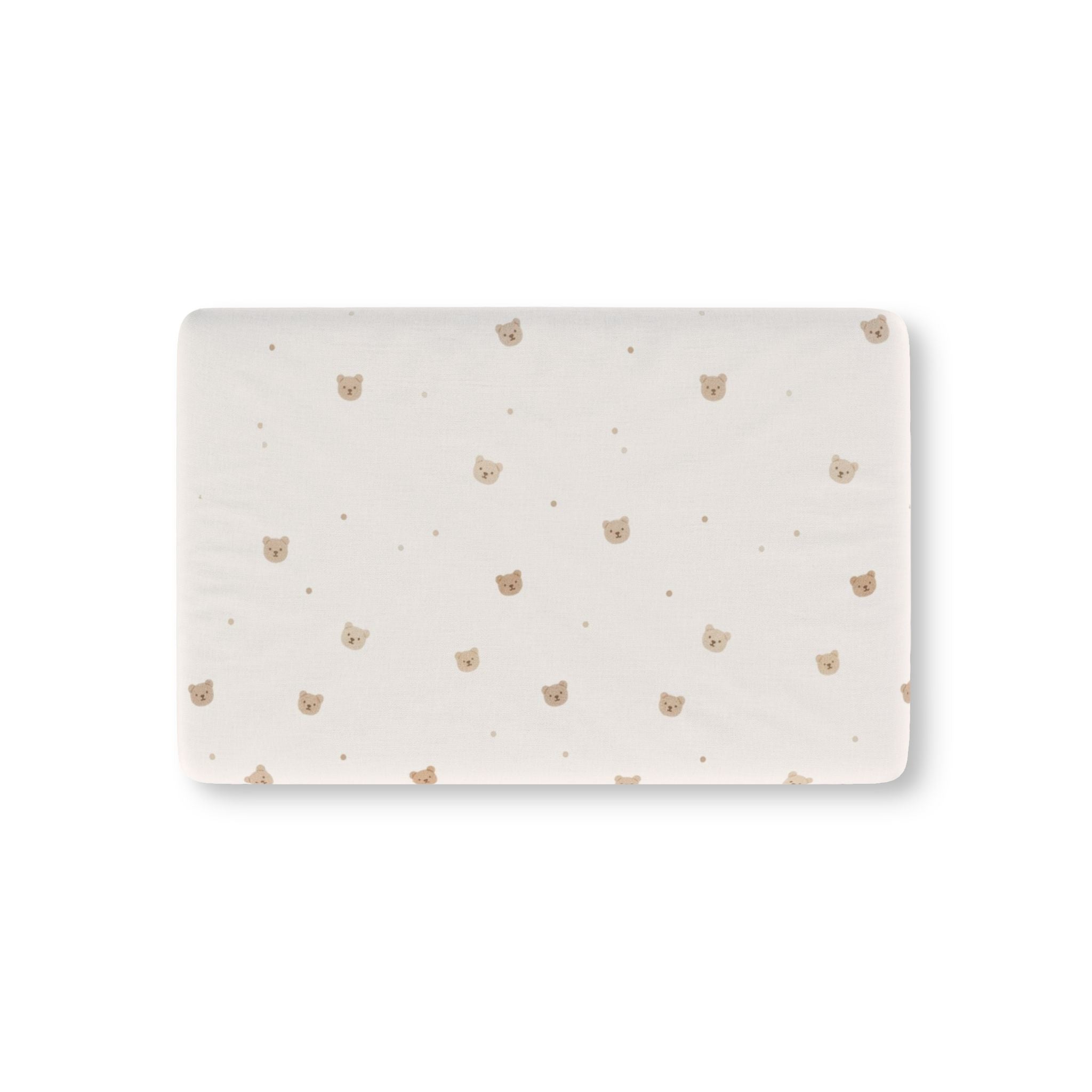
A practical takeaway: photograph the mattress label next to your tape measure and keep both with your order notes. If a question comes up later, you have the answer in one image.
Ordering Custom Size Baby Crib Sheets With Confidence
A custom order only works if you hand over the right numbers in the right format. When you order custom size baby crib sheets, give the seller length, width, and depth in inches, in that order, and say whether the depth is the mattress thickness or the pocket depth you want.
Two details are worth spelling out:
- Pocket depth: how far the fabric wraps under the mattress. Deeper pockets suit thicker mattresses.
- Elastic placement: all the way around the hem holds better than corners only.
Ask whether the seller pre-shrinks the fabric. If not, add a little allowance, because cotton in particular can pull in after the first wash.
A short written confirmation before production saves everyone a headache. If the seller does not offer one, ask for it in writing.
The Best Fabric for Baby Crib Sheets Comes Down to Feel and Season
The best fabric for baby crib sheets is the one that suits your baby's skin and your nursery's temperature, not the one with the highest thread count. Softness matters, but so does breathability.
Here is how the common options compare.
| Fabric | Feel | Breathability | Shrinkage Risk | Best For |
|---|---|---|---|---|
| Cotton | Crisp, cool | High | Moderate | Warm rooms, year-round |
| Jersey cotton | Stretchy, soft | High | Moderate | Easy changes, snug fit |
| Bamboo | Silky, cool | High | Higher | Sensitive skin, summer |
| Poly-cotton blend | Smooth, durable | Moderate | Low | Frequent washing |
Cotton, Jersey, Bamboo, and Blends at a Glance
Fabric choice is a matter of feel and season. Cotton and jersey cotton are common, breathable options, bamboo feels cool and silky, and poly-cotton blends are often chosen for frequent washing.
For a deeper look at matching fabric to sensitive skin, our guide on how to pick a blanket fabric for sensitive skin walks through the same trade-offs. If you are planning a cooler-weather nursery, this piece on creating a cozy winter nursery covers seasonal fabric choices.
Crib Sheet Safety Starts With a Snug Fit
Crib sheet safety comes down to one principle: nothing loose near your baby. A fitted sheet should wrap the mattress tightly, with no bunching, no gaps at the corners, and no excess fabric that can be pulled up.
Follow the safe sleep guidance from the American Academy of Pediatrics and the Consumer Product Safety Commission on keeping the sleep surface flat and free of loose bedding.
Watch out: a sheet that is one size too big can look fine when you make the bed and ride up overnight. Test the fit by tugging each corner firmly before bedtime.
How Many Crib Sheets Do I Need for a Realistic Laundry Week
Three is the practical minimum, and four is comfortable. One stays on the crib, one sits in the wash, and one waits in the drawer as backup. Night spit-ups and leaks rarely arrive on schedule.
If your baby is prone to middle-of-the-night changes, add a fourth. It costs less than a late-night panic.
Personalization That Stays Calm in the Nursery
Personalization works best when it whispers rather than shouts. A name in a soft neutral font, a birth date, or a small motif reads calm. A busy print with a large name competes with everything else in the room.
Our guide to styling a nursery with custom crib sheets shows how a personalized sheet can sit quietly alongside the rest of the decor. For a coordinated gift, a personalized baby blanket pairs naturally with a matching sheet.
If you are ordering a custom print, ask for a preview before production. Our product pages include a live preview, so you can see your design before ordering.
Care, Shrinkage, and the Fit Check After Washing
A custom sheet is only as good as its fit after washing. Fabric can change size after washing, and the amount depends on the material, the water temperature, and how hot the dryer runs. Plan for the check below before you decide the sheet is right.
Care by Fabric Type
Follow the care instructions that come with your sheet.
Why Shrinkage Happens
The first wash relaxes that tension, and heat in the dryer can pull the fibers in further. A sheet cut with no allowance can end up a half-inch short at the corners, enough to lift when your baby moves. This is why asking a maker whether they pre-shrink the fabric, or build in allowance, is worth the question before you order.
The Fit Check After Washing
After the first wash, put the sheet back on and check four things:
- All four corners pull down fully over the mattress, with the elastic seated under the edge
- No fabric lifts when you run a hand firmly across the surface
- The hem sits flat, with no curling or twisting
- The sheet stays put when you tug each corner upward with moderate force
When to Stop Using a Sheet
If the sheet no longer reaches the corners, or if it lifts when tugged, it is a safety issue, not just an annoyance. Replace it rather than stretching it back on. The same applies if you change mattresses: a sheet fitted to a thinner mattress may not stay secure on a thicker one, even if it still looks fine when you make the bed.
Watch out: a sheet that fits on day one can loosen after several wash cycles, so repeat the tug test every few weeks, not just after the first wash.
A practical takeaway: keep one spare sheet that has passed the fit check, so a mid-wash failure never leaves you without a safe option at bedtime.
Check Your Measurements and Order Your Crib Sheet
Before you order, run through your numbers one last time: length, width, depth, and the size name on the mattress label. Then confirm the fabric, the pocket depth, and whether the seller offers a preview.
If you are shopping for a baby shower or a new arrival, a personalized blanket makes a lasting companion gift. Our baby collection lets you add a name, date, or photo and see the design before you order.
Getting a crib sheet that fits right takes ten minutes of measuring and a little patience with the details. That is where we can help: Cloud & Cherish creates custom baby blankets in velveteen, plush minky, and sherpa fleece, personalized with a name, date, message, or photo, with a live preview so you see the design before it is made. Order early and check the delivery estimate at checkout.
Frequently Asked Questions
How do I make sure a custom baby crib sheet fits the mattress?
Measure the mattress yourself rather than trusting the crib box. Note the length, width, and depth in inches, then compare those numbers with the sheet's listed pocket depth. A custom baby crib sheet should pull over all four corners with a little tension and no bunching. After the first wash, re-check the fit: the fabric should still sit flat across the surface with the elastic fully tucked under.
Are personalized crib sheets safe for babies?
Personalization on the sheet itself does not change the safety basics. What matters is crib sheet safety: a snug fit on a firm flat mattress, no loose fabric, and nothing else in the crib. Keep the design on the fabric surface rather than adding separate tags, toys, or attachments. Follow the care instructions so the sheet keeps its shape wash after wash.
How many crib sheets do I need?
Two or three is a practical starting point. One stays on the crib, one waits in the drawer, and one handles the wash cycle after a middle-of-the-night change. If you are washing less often or have a mini crib plus a full-size crib, add one more. A custom size baby crib sheet takes the same laundry slot as any other, so the count is really about how often you want to run a load.
What is the best fabric for baby crib sheets?
There is no single winner. Cotton and jersey cotton feel familiar and breathe well in warmer months, bamboo fabric is smooth and cool to the touch, and a poly-cotton blend holds its shape through repeated washing. Match the fabric to the season and to how the nursery feels, and check the weave and weight rather than the label alone. Softness matters, but fit and washability matter just as much.
