

Quick Summary
To style a nursery with custom crib sheets, start by choosing a theme and a calm three-color palette, then pick a crib sheet that repeats one of the room's colors. Keep the crib itself clear, with only a firm mattress and one correctly fitted sheet.
- Pick one dominant color, one supporting color and one accent for the room.
- Choose a custom crib sheet that repeats a color already in the rug, curtain or decor.
- Mix patterns by varying scale: one large print, one medium print and one solid.
- Measure the mattress length, width and depth and compare them to the listed sheet size.
- Keep loose blankets, pillows, bumper pads and stuffed animals out of the crib.
Table of Contents
- Start With the Room: Choosing a Theme and Palette
- Matching Crib Sheets With Nursery Decor
- How to Mix Patterns in a Nursery Without Overwhelming It
- A Step-by-Step Styling Workflow for Custom Crib Sheets
- How Many Crib Sheet Sets Do You Need?
- Keeping the Crib Simple and Safe
- Order a Personalized Sheet for Your Nursery
- Frequently Asked Questions
How to Style a Nursery with Custom Crib Sheets
Last Updated: November 16, 2026
Start With the Room: Choosing a Theme and Palette
Custom crib sheets can tie a whole nursery together, but only when the room has a clear starting point. Choose a theme first, then pick a palette that supports it. This order keeps the room calm and stops it from looking like a collection of random purchases.
Start by asking how you want the room to feel. Soft and sleepy? Bright and playful? Warm and natural? Your answer points you toward the right colors and patterns. Most nurseries work best with one main theme and two or three supporting colors.
A warm, neutral nursery is a good place to begin. If you want a gentle, cozy look, start with a base of cream walls and build from there.
Picking Colors That Stay Calm
Calm nurseries tend to use muted colors. Soft creams, warm grays, dusty greens and gentle browns all help the room feel restful. Bright primary colors can work too, but use them in small doses, such as a single accent pillow or a framed print.
A simple rule helps: pick one dominant color, one supporting color and one accent. For example:
- Dominant: cream or warm white walls
- Supporting: honey or caramel tones from your bedding
- Accent: a soft green or muted blue in a small decor piece
Keep the contrast low. High contrast can feel busy to a baby's eyes and to a tired parent at 3 a.m.
Matching Crib Sheets With Nursery Decor
Your crib sheet is one of the largest textiles in the room, so it sets the tone. Match it to the colors already in the space, and check the rest of the room against it.
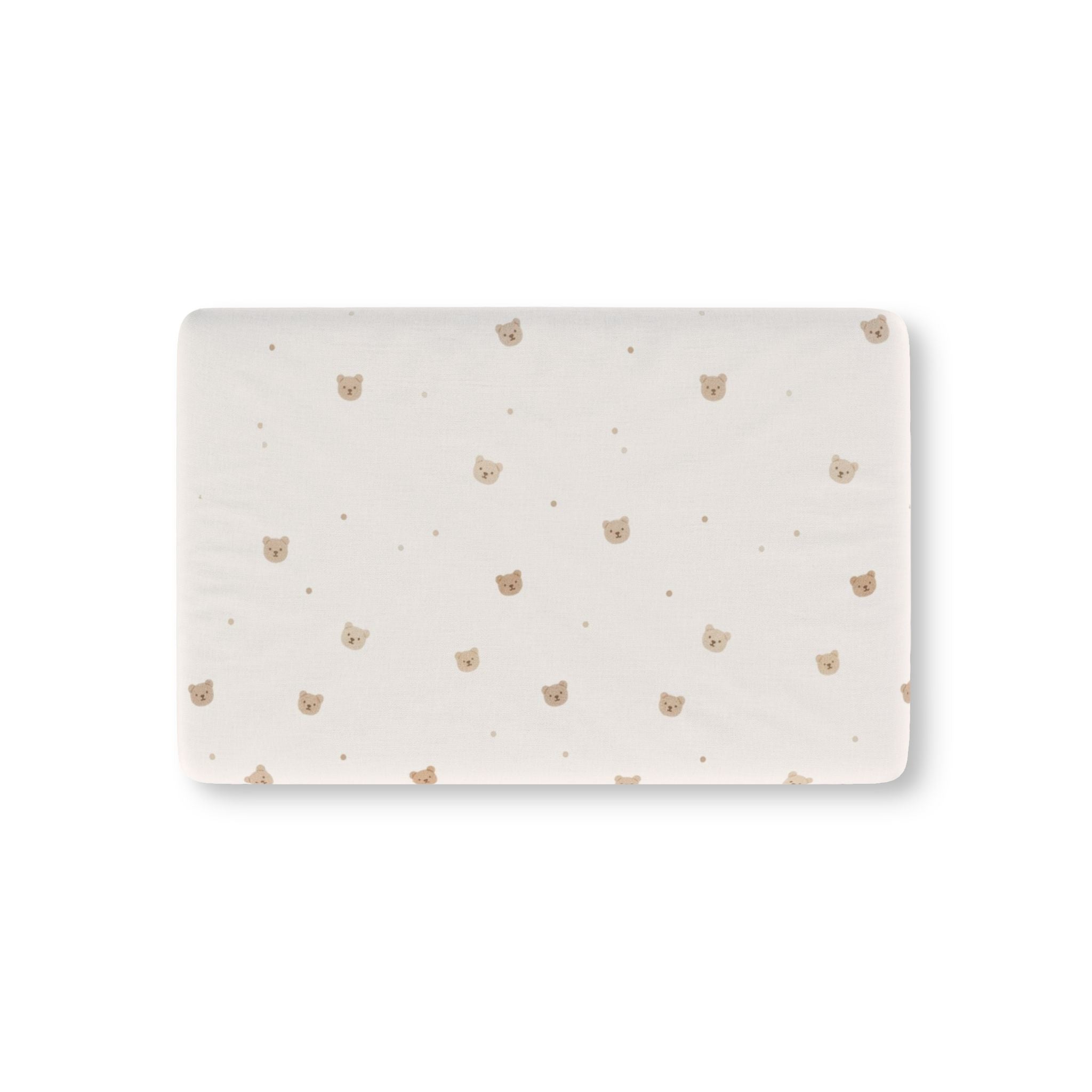
Start with what you already own. Look at the dresser, the rug, the curtains and any wall art. Pick out the two or three colors that show up most.
A custom crib sheet gives you more control here. You can choose a design that echoes a rug color or a framed print.
Watch for one common mistake: matching everything exactly. A room where every item is the same shade looks flat. Let the crib sheet pick up one tone from the rug, and let the dresser have a slightly different wood color.
How to Mix Patterns in a Nursery Without Overwhelming It
Mixing patterns can look charming, but it takes some care. The safest approach is to vary the scale. Pair one large print with one small print, and keep a solid piece nearby to rest the eye.
Try this simple formula:
- One large-scale pattern (the crib sheet or a rug)
- One medium-scale pattern (a curtain or cushion)
- One solid color (a blanket or a chair)
Keep the palette consistent across all three patterns. If the crib sheet uses honey and cream, choose a curtain with the same tones and a solid chair in a related shade.
Avoid mixing two busy patterns of similar size. Two bold prints of similar scale compete for attention. If you love both, separate them with a solid piece or put them on opposite walls.
A Step-by-Step Styling Workflow for Custom Crib Sheets
Most nursery styling advice stops at inspiration. This workflow turns it into a sequence you can actually follow, and it puts the custom crib sheet at the center where it belongs. Work through the steps in order so you do not buy a sheet that fights the rug you already own.
- Decide how the room should feel. Write down three words, such as calm, warm, or playful. Every later choice gets checked against those words.
- Build a three-color palette. Pick one dominant color for walls and large furniture, one supporting color, and one accent. Keep the palette to three colors so the room reads as planned rather than collected.
- Choose the crib sheet print and scale. Decide whether the sheet is the room's main pattern or a quiet repeat of a color already in the space. A large print makes the crib the focal point; a small print or solid lets wall art lead.
- Customize the sheet. Choose the fabric, print scale, color placement, and any personalization (see the customization notes below).
- Measure the mattress and confirm the fit. Check length, width, and depth against the sheet's listed size before ordering.
- Place the largest pieces next. Rug, curtains, and dresser go in before small accents, because they set the room's color balance.
- Layer accents last. Add a framed print, a cushion, or a blanket that repeats one palette color. A Personalized baby blankets set works well here, since a name or date adds a keepsake touch that matches the rest of the room.
- Check from the doorway. Stand back and remove anything that competes with the crib sheet for attention.
How to Customize a Crib Sheet
A custom crib sheet is more than a print choice. Four decisions shape how it looks and how it works in the room.
- Fabric. Check the product listing for the fabric details of the sheet you are considering, and follow the care instructions to keep it soft.
- Print scale. A large motif reads as a statement and works best when the rest of the room is quiet. A small motif reads as texture from across the room and pairs easily with a patterned rug or curtain.
- Color placement. Decide whether the sheet's main color should match the walls (for a calm, blended look) or contrast with them (for a focal point). Repeating one color from the rug or curtain is the safest link.
- Personalization. Some designs can be personalized, so check the product page for the options available for the sheet you are considering.
Watch out: A busy print in a very large scale can overwhelm a small room. If the nursery is tight, choose a smaller motif or a solid with a personalized detail instead.
Measuring for a Secure Fit Across Crib Types
A snug fit matters for both looks and safety. A loose or wrinkled sheet can bunch up, look messy, and create a hazard. Measure the mattress length, width, and depth, then compare those numbers to the size on the product listing.
- Standard crib. The Teddy Bear crib sheet is listed for standard cribs, so check its listed size against your mattress.
- Mini and portable cribs. The same design is also listed for mini and portable cribs, so check the listed size before ordering.
- Nonstandard and convertible cribs. Measure your mattress and compare it to the size on the product listing before ordering.
A correctly fitted sheet should sit snugly across the mattress with no loose fabric at the corners. Check the fit before each use, and follow the care instructions.
The workflow below summarizes the main steps in order, so you can check each stage before moving on.
| Step | What to do | Note |
|---|---|---|
| 1 | Decide how the room should feel | Write down three words |
| 2 | Build a three-color palette | One dominant, one supporting, one accent |
| 3 | Choose the crib sheet print and scale | Large print or quiet repeat |
| 4 | Customize the sheet | Fabric, scale, color, personalization |
| 5 | Measure the mattress and confirm the fit | Check length, width and depth |
| 6 | Place the largest pieces next | Rug, curtains and dresser |
| 7 | Layer accents last | Repeat a palette color |
| 8 | Check from the doorway | Remove anything competing for attention |
How Many Crib Sheet Sets Do You Need?
Many families find that a couple of sheets is convenient, so one can stay on the crib while another is being washed.
If you plan to change the look of the room later, a second set in a different design can help. Keep the extra set in a drawer, and swap it in when the mood changes.
Keeping the Crib Simple and Safe
Styling should never get in the way of a safe sleep space. Safe sleep guidance generally recommends that babies sleep on their backs on a firm, flat surface with a fitted sheet, and that the crib stay clear of everything else. That means no loose blankets, pillows, bumper pads, or stuffed animals in the crib, even when they match the room beautifully.
A fitted sheet on a firm mattress is the core of a safe setup. Decorative extras belong on the walls, the dresser, or the rocking chair, where they add warmth without entering the sleep space.
What Belongs in the Crib and What Does Not
- In the crib: a firm mattress and one correctly fitted sheet.
- Out of the crib: loose blankets, quilts, pillows, bumper pads, stuffed animals, and any decor that could cover a baby's face.
- Near the crib: a wall print, a rug, or a chair, as long as nothing hangs low enough to be pulled in.
Use the crib sheet only for the mattress it was made for, and check the fit before each use. A sheet that is too loose can bunch up, so confirm the corners stay put after you make the bed.
Watch out: A decorative blanket draped over the crib rail is not recommended for sleep. Keep blankets out of the crib until they are used for supervised play.
Follow your product's care instructions to keep the fabric soft and the fit even. Before you finalize the setup, check current safe-sleep guidance with your pediatrician, since recommendations are updated over time.
Order a Personalized Sheet for Your Nursery
A personalized crib sheet makes a thoughtful finishing touch, especially for a baby shower gift or a nursery you have been planning for months. Choose a design that fits your palette, then pair it with a matching blanket for a complete look. A personalized baby blanket can be the keepsake piece that sits in a chair or travels home from the hospital.
Our product pages include a live preview, so you can see your design before you order. Every blanket is made to order and printed in the USA. Order early, and check the delivery estimate at checkout so you know when your nursery pieces will arrive.
Explore our baby collection to find a crib sheet and blanket that fit your room. Start with the calm, neutral palette and build your nursery one piece at a time.
Frequently Asked Questions
How many crib sheet sets do you need?
Most families find that two to three fitted crib sheets are enough. One sheet stays on the crib while another is in the laundry, and a spare covers unexpected accidents. If you plan to change sheets often, keep an extra set on hand so you are never waiting on a delivery. Check the delivery estimate at checkout and order early, especially before a shower or arrival date.
Can I mix patterns in a nursery with a custom crib sheet?
Yes. Pick one anchor pattern, such as the custom crib sheet, and repeat one or two of its colors in a smaller print on a blanket or wall art. Keep the scale different so the patterns read as separate pieces. Stick to a palette of three or four colors and let solid neutrals give the eye a place to rest. This keeps the room layered without feeling busy.
What colors work well for a calm nursery?
Soft, muted tones usually feel calmest. Cream, warm white, honey, caramel and soft sage pair well together and sit comfortably with natural wood finishes. Use a deeper accent color sparingly, such as one framed print or a single pillow, so the room has contrast without feeling loud. A cream base with gentle tan or honey tones is an easy place to start.
Does a crib sheet's design affect safe sleep?
The design itself does not change how safe a crib is, but the setup does. Use only a firm, flat mattress and a fitted sheet that fits snugly on it. Keep loose blankets, pillows and stuffed animals out of the crib. Decorative sheets are fine as long as the sheet fits the mattress securely and the crib is otherwise kept bare, following the safe sleep guidance from your pediatrician.
